
How to Book a Mobile Billboard for an Event
Last Updated: November 8, 2026
Quick Summary
To book mobile billboard space for an event, define one goal and audience, then contact a provider 8 to 12 weeks ahead to confirm venue access and permits. Choose a digital LED or static vinyl truck, request an itemized quote, and approve creative before go-live.
- Start 8 to 12 weeks before the event, since truck availability on popular dates can be limited.
- Confirm venue access, parking and any municipal permit rules in writing before confirming the booking.
- Compare quotes line by line, because permits, production and route hours can be left out of day rates.
- Choose digital LED trucks for changing or multiple messages, and static vinyl trucks for a single fixed design.
- Build a buffer day between creative approval and go-live to fix last-minute screen content problems.
Table of Contents
- What a Mobile Billboard Truck Does for an Event
- Step 1: Define Your Event Goals and Audience
- Step 2: Plan Your Booking Timeline
- Step 3: Understand Pricing and Budget Planning
- Step 4: Choose the Right Truck, Routes and Event Coverage
- Step 5: Prepare Creative Assets and Get Approvals
- Booking Your Event Campaign With Texas Mobile Advertising
- Frequently Asked Questions
What a Mobile Billboard Truck Does for an Event
Booking a book mobile billboard for an event puts your message on the road and in front of the crowd, at the exact time and place people are gathering. Outdoor Advertising Association of America industry overview describes out-of-home advertising as a channel that reaches people where they already are, and a mobile billboard truck applies that idea to a specific event. At Texas Mobile Advertising, we build campaigns around this one goal: make sure your message is seen, not skipped.
A mobile billboard truck is a vehicle with a large display panel mounted on its side or back, and a book mobile billboard setup works the same way. It drives routes, parks at event entrances, or circles a venue during peak hours. Event organizers, product launch teams and local businesses use these trucks to reach attendees, nearby commuters and the people who arrive early or leave late.
The main advantage is placement. A static billboard stays in one location. A mobile truck can move to where the audience is, which matters for festivals, sports events, grand openings and sampling days.
Digital LED Trucks vs. Static Vinyl Wrap Trucks
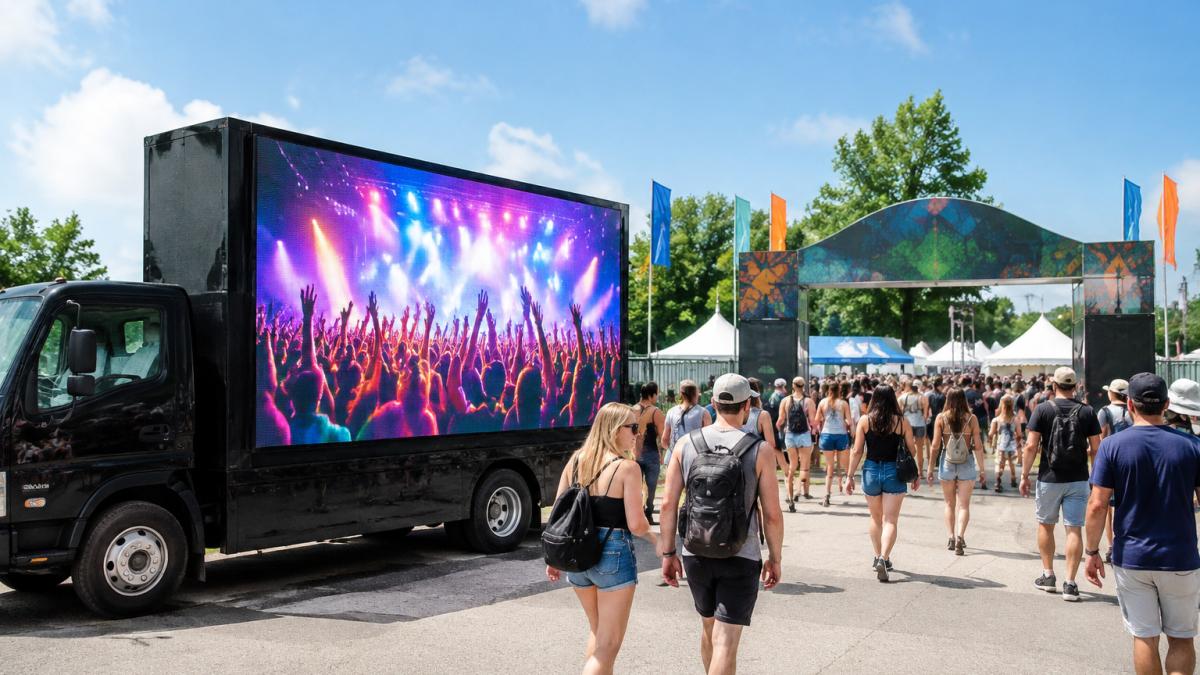
Choosing between formats is one of the first decisions you will make. Digital LED trucks can display video, animation, rotating messages and live content, which suits campaigns with several offers or a need to update copy during the day. Static vinyl wrap trucks show one printed design. They work well for brand awareness, simple messages and campaigns where the artwork will not change.
Digital screens can use motion to draw the eye, while static designs are a simpler option when creative is locked early. Compare static and digital mobile billboard ads side by side to weigh the cost of each format. Ask which format best fits your message count and how often your creative will change.
Step 1: Define Your Event Goals and Audience
Start by stating one primary goal for the campaign. Common goals include ticket sales, product trial, store traffic, sign-ups or general brand awareness. A campaign with one clear goal is easier to measure and easier to design.
Next, define the audience. Write down who will be at or near the event, what they care about and what action you want them to take. A sports fan at a stadium parking lot responds differently than a shopper near a new store opening.
A common mistake is trying to promote five offers on one truck. Pick one message. A single call to action, such as “Visit our booth” or “Scan for 20% off,” gives the audience something clear to remember.
Put these answers in a short brief. You will use it when you request quotes, plan routes and approve creative later.
Step 2: Plan Your Booking Timeline
Booking timing affects both availability and cost. Booking availability can be limited on popular dates, so contact the provider as early as your event calendar allows. Contact the provider as early as your event calendar allows, and treat the timeline below as a working checklist rather than a fixed schedule.
| Stage | Target Timing | What Happens |
|---|---|---|
| Goal and audience brief | 8 to 12 weeks before event | Confirm goals, audience, budget, and event dates |
| Venue and permit check | 8 to 10 weeks before event | Confirm truck access, parking, noise rules, and any municipal permits |
| Quote request | 6 to 8 weeks before event | Share dates, locations, format needs, and access constraints |
| Booking confirmation | 4 to 6 weeks before event | Lock truck, routes, and display hours in writing |
| Creative delivery | 2 to 3 weeks before event | Submit artwork or video files to spec |
| Final approval and go-live | 1 week before event | Confirm schedule, content, and backup plan |
Two stages deserve extra attention because they are where event campaigns most often slip. First, the venue and permit check. Confirm with the venue whether a mobile billboard truck can park on site, where it can stage, and whether the venue charges an access or parking fee. If the truck will circle public streets near the event, check whether the local jurisdiction requires a permit for mobile advertising or restricts stopping and standing. Rules vary by city and by event, so get the answer in writing before you confirm the booking.
Second, the final approval stage. Build in a buffer day between creative approval and go-live. If the screen content needs a last-minute correction, you want time to fix it without missing the arrival window. Confirm who on your side has final sign-off and make sure the provider has that person’s contact information.
Contingency planning belongs in the timeline, not after it. Ask the provider what happens if weather cancels an outdoor event, if traffic delays the truck’s arrival, or if a screen or power system fails. A reputable operator will have a backup vehicle or a rescheduling policy. Get the cancellation and rescheduling terms in writing at booking, because event dates rarely move without cost.
For multi-day or multi-location events, add a confirmation checkpoint 48 hours before each display day. A short call to confirm the route, the arrival time, and the on-site contact prevents the most common day-of problem: the truck arriving at the right place at the wrong time.
Watch out: booking a truck before confirming venue access and local permit rules can leave you with a confirmed reservation you cannot legally or physically use on event day.
Step 3: Understand Pricing and Budget Planning
Mobile billboard pricing is not a single day rate. It is a bundle of line items, and the fastest way to blow a budget is to compare headline numbers that exclude half the cost. Providers often quote per truck, per day, with add-ons for route hours, production, and event-site logistics. Ask for an itemized quote so you can see exactly what is included and what is not.
The five cost drivers that move the total most:
- Truck format. Digital LED trucks generally cost more to run than static vinyl wrap trucks because of their screen hardware and power requirements.
- Campaign duration and number of days. Some providers price the first day at full rate and discount additional consecutive days on the same truck.
- Route or event coverage hours. A standard campaign day is often built around a set number of display hours (for example, a morning arrival window plus an evening departure window). Extended hours, overnight parking, or split shifts add cost.
- Creative production. If you supply print-ready or screen-ready files, production is minimal. If the provider designs or animates the content, expect a separate production line item. Video and animation cost more to produce than a single static design.
- Permits, parking, and venue fees. Event-site parking, venue access fees, and any municipal permit costs are usually pass-through charges. They vary by venue and are the line item most often left out of a competitor’s headline quote.
A realistic way to build the budget is to set a total and work backward. Decide the number of event days first, then choose the format that fits the remaining budget after production and logistics. If the event runs multiple days at one venue, ask whether the truck can stay parked overnight or must return to a depot, because that changes both route hours and cost.
When you compare quotes, normalize them. Ask each provider to break out truck rate, route hours, production, permits, and any fuel or staffing surcharge. A quote that looks lower may exclude production and event-site fees, which can erase the difference. Request the quote in writing with an expiration date, since truck availability and event-date demand shift pricing.
Watch out: a per-day rate quoted without route hours or production included can double your actual cost once add-ons are applied, so compare totals line by line, not day rates.
Step 4: Choose the Right Truck, Routes and Event Coverage
Match the truck to the setting. Digital LED trucks can suit high-traffic routes and events with evening visibility. Learn how digital billboards adapt to local trends and events for event coverage. Glass-walled display trucks can showcase products. Vinyl billboard trucks are an option for broad awareness.
Route planning determines who sees the message. See how technology helps optimize route planning for truck advertising to reach the right audience. Map the event entrances, parking areas, main roads and times of peak traffic. A truck parked in a crowded entrance during arrival hours can reach more of the audience than one driving empty streets. For multi-location campaigns, such as several new store openings across Texas, plan each location’s coverage window separately.
Ask the provider how availability works across dates, since truck capacity can be limited.
Step 5: Prepare Creative Assets and Get Approvals
Creative is where many campaigns lose time. Find out the exact file specifications, resolution, aspect ratio, video length and file format before you design anything. Your provider will supply the dimensions for the chosen truck and screen.
Keep the message simple. For practical ideas on making your campaign stand out, explore getting creative with your mobile billboard advertising campaign. Viewers may see the truck for only a few seconds while moving, so use large text, a clear logo and one call to action. Test readability at a distance before submitting final files.
Set an approval workflow with named reviewers and a deadline. Include legal and brand reviewers if your industry has disclosure or compliance requirements. A common mistake is sending files late, which compresses review time and raises the risk of a rushed mistake.
For event campaigns, plan a QR code or short URL if you want to track response. Test it on a phone before it goes live.
Booking Your Event Campaign With Texas Mobile Advertising
Texas Mobile Advertising has completed more than 1,400 mobile billboard advertising vehicle campaigns. Our LED digital trucks, glass-walled display trucks and vinyl billboard trucks give you format options for your goals. If you are planning a festival, sports event, product launch or store opening, contact us for a free consultation. Share your event dates, locations and goals, and we will outline the options and next steps.
Frequently Asked Questions
How much does it cost to book a mobile billboard for an event?
Pricing depends on quantity of trucks, event dates, duration, routes and delivery distance, so there is no single flat rate. Texas Mobile Advertising does not publish standard prices here. Contact the team for a free consultation and a quote tailored to your event, schedule and target area.
How far in advance should I book a mobile billboard truck?
Book as early as you can, ideally several weeks before your event, because truck availability is limited during peak festival and sports seasons. Earlier booking gives you more room to choose dates, lock in routes and finish creative approvals before the campaign runs.
What information do I need to book a mobile billboard for an event?
Have your event name, dates and city, expected attendance, target audience, campaign goals, preferred routes or venues, and the creative files you plan to run. Knowing your message and calls to action helps the team recommend the right truck format, whether digital LED or static vinyl wrap.
Can a mobile billboard truck display live video or event promotions?
Digital LED mobile billboard trucks can show video, animation, countdown clocks and rotating promotional content. Static vinyl wrap trucks display a fixed image. Choose digital when you need motion, rotating messages or real-time event updates.
