
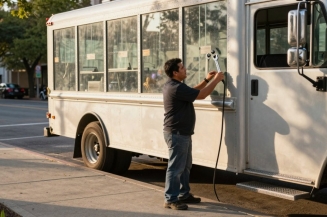
Outdoor Advertising for Festival Promotion Guide
Last Updated: November 26, 2026
Quick Summary
Outdoor advertising helps festival promotion by reaching people on roads, in parking lots, and near venues before they buy tickets. Mobile billboard trucks, with LED digital or vinyl formats, can follow the audience to targeted neighborhoods and campuses. Planning the budget from the ticket goal and starting bookings early gives festival promotion the best results.
- Mobile billboards can move toward neighborhoods, campuses, and event districts where ticket buyers live and gather.
- Compare outdoor vendors on cost per local visitor reached, not sticker price.
- Split the media budget across three waves, weighting the final push heaviest.
- Start planning 16 weeks out, since prime placements can be limited.
- Build at least a one-week buffer for permit approvals and print production.
Table of Contents
- How Can a Festival Use Billboards to Attract Attendees?
- Outdoor Advertising Options for Festivals and Events
- Outdoor Event Signage Ideas That Guide Attendees
- Mobile Billboard Advertising for Events
- Festival Promotion Ideas for Local Audience Reach
- Outdoor Advertising Cost and Budget Planning
- Building Your Festival Outdoor Promotion Timeline
- Booking Mobile Advertising for Your Next Event
- Frequently Asked Questions
Outdoor advertising can make or break a festival’s attendance, and mobile billboards give promoters a way to put their message in front of crowds before they ever buy a ticket. Mobile billboard trucks, including LED digital and vinyl formats, can be used for campaigns like these. Festival promotion works best when the message reaches people where they already are, on roads, in parking lots, and near venues. This guide walks through the options and the planning steps that help event teams get that result.
How Can a Festival Use Billboards to Attract Attendees?
A festival can use billboards to reach drivers and pedestrians who have not yet heard about the event. Fixed billboards work well for long-running awareness, while mobile billboards can move toward the areas where ticket buyers live and gather.
Fixed billboards stay in one place, so they reach the same audience every day. Mobile billboards go to the neighborhoods, college campuses, and event districts that matter most in the weeks before a festival opens its gates. That flexibility lets promoters match the message to the audience.
A common mistake is placing the same creative everywhere. Attendees near a stadium respond to different cues than commuters on a highway. Change the headline, lineup highlight, or date to fit each location.
Outdoor Advertising Options for Festivals and Events
Festival teams have several outdoor formats to choose from, and each one serves a different job. To compare the options side by side, see mobile billboards versus digital outdoor advertising. Some build broad awareness, while others guide people once they arrive.
- Billboards and large-format displays: Static or digital panels along major roads that build long-term recognition.
- Mobile billboards: Trucks with LED screens or printed panels that drive to targeted areas.
- Banners and flags: Low-cost signage near venues, transit stops, and entry routes.
- A-board and yard signs: Inexpensive local markers that reinforce the message near retail corridors.
- Event tents and booths: Presence at community events where attendees can sign up or buy tickets.
The best mix depends on the date, the budget, and where the target audience spends time. A festival two months out often leans on billboards and mobile trucks, while a festival two weeks out may shift toward local signage and street teams.
The main outdoor formats differ in what they are best used for, as summarised below.
| Format | Best for | Key difference |
|---|---|---|
| Billboards and large-format displays | Long-term recognition | Static or digital panels along major roads |
| Mobile billboards | Targeted areas | Trucks with LED screens or printed panels that drive to targeted areas |
| Banners and flags | Venue and transit routes | Low-cost signage near venues, transit stops, and entry routes |
| A-board and yard signs | Retail corridors | Inexpensive local markers that reinforce the message |
| Event tents and booths | Community events | Presence where attendees can sign up or buy tickets |
Outdoor Event Signage Ideas That Guide Attendees
Once people arrive, signage keeps them moving smoothly and reduces confusion at busy gates. Good outdoor event signage also reinforces the festival brand for everyone who walks past.
Directional and wayfinding signs should be placed where decisions happen: at parking entrances, shuttle stops, ticket lines, and stage junctions. Keep text short and readable from a distance. Use arrows, color coding by zone, and clear icons for restrooms, water, and first aid. Clear wayfinding also helps crews coordinate activity around stages, where stage effect equipment procurement should account for safe access and unobstructed routes.
Feather flags and banners work well along pedestrian routes because they catch attention without blocking traffic. Check local rules before placing anything in public rights of way, since permit requirements vary by city.
Mobile Billboard Advertising for Events
Mobile billboard advertising fits festivals well because it can follow the audience instead of waiting for them to pass a fixed sign. For a detailed planning guide, see mobile billboard advertising for music festivals. A truck can circle a campus before a student event, visit a park before a summer concert, or move through a downtown district on the weekend before ticket sales peak.
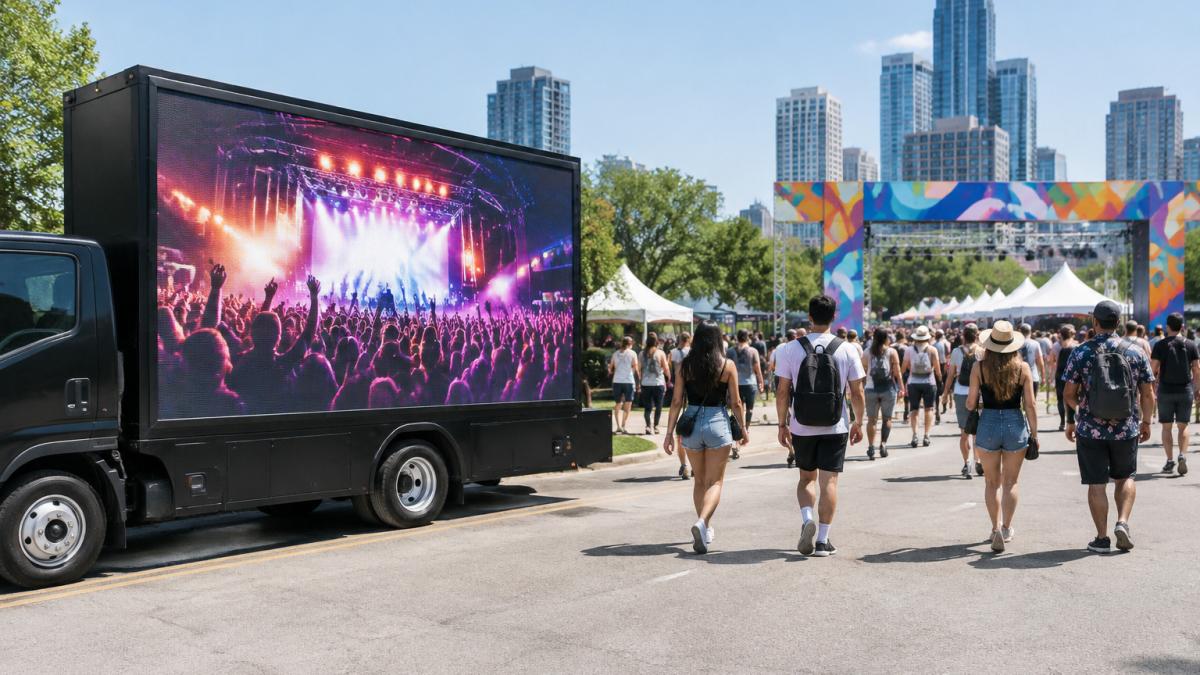
LED digital trucks can rotate lineup announcements, ticket deadlines, and video clips. Vinyl trucks suit static messages and are often simpler to budget. Glass-walled display vehicles can showcase merchandise, sponsor products, or a sample of the festival experience.
Planning routes ahead of time matters. Work with the vendor to map high-traffic areas, avoid restricted zones, and schedule runs around peak hours. Track which routes generate the most ticket sales or social mentions so later runs can be adjusted.
Festival Promotion Ideas for Local Audience Reach
Local reach depends on knowing who lives near the venue and what they already attend. Festival promotion works best when it connects with the community rather than shouting at it.
Partner with local bloggers, community calendars, and neighborhood groups to share event details. For more tactics, read high-impact advertising for local events. Offer early-bird tickets to local residents, or build a small street team that visits coffee shops and campuses. Social media advertising can target zip codes near the festival grounds, and campaign results can be compared against the outdoor placements to see what drives sign-ups.
Creative ideas help too. A countdown on a mobile LED truck, a sweepstakes tied to a local business, or a short video of last year’s crowd can give locals a reason to act now.
Outdoor Advertising Cost and Budget Planning
Outdoor advertising pricing depends on several factors, so the most practical way to plan a festival budget is to understand what drives the number before you request quotes. Pricing typically depends on the format, the number of units or truck-days, the market and route density, the campaign length, and the production and installation labor.
A practical way to build the budget is to work backward from the ticket goal. Start with the number of tickets you need to sell, the share you expect outdoor to influence, and the average ticket price. That gives you a revenue ceiling for the channel.
Break the budget into several cost categories instead of a single media rate:
- Media and vehicle time: the billboard space, truck-days, or digital slot fees. This is usually the largest line and the one vendors quote first.
- Production: design, print, vinyl wraps, LED content builds, and any versioning for different neighborhoods or languages.
- Logistics: driver and operator time, fuel, route permits, and overnight parking or staging.
- Contingency: a reserve for weather delays, route changes, and late creative updates in the final two weeks.
A common pattern is to split the media budget across three waves, an early awareness wave when tickets first go on sale, a mid-campaign push around lineup announcements or presale deadlines, and a final push in the last two weeks. Weight the final wave heaviest, because that is when undecided buyers act.
Compare formats on cost per local visitor reached, not sticker price. Ask each vendor for the route or placement map, the estimated daily reach, and how they measure it, then divide the quoted cost by that reach to get a comparable number.
Watch out: quotes that exclude production, permits, or driver time can look cheaper than they are once those costs are added, so ask every vendor to itemize all costs in writing before you compare.
For current pricing, request a quote matched to your festival dates, route plan, and creative scope from Texas Mobile Advertising through its website, and ask for the cost breakdown so it can be compared against fixed-format quotes. To see how mobile advertising is priced across different pricing models, review the options before requesting quotes.
Building Your Festival Outdoor Promotion Timeline
Outdoor advertising has production and booking lead times that festival teams can underestimate, so the timeline should start early, well ahead of the ticket-sales calendar.
Weeks 16 to 13, plan and reserve. Confirm the ticket goal, the budget buckets, and the target neighborhoods. Request quotes from fixed-billboard and mobile vendors in parallel and ask for placement or route maps. Reserve the highest-demand inventory early, since prime placements can be limited.
Weeks 12 to 9, produce and launch awareness. Finalize creative, send files to print or LED build, and approve proofs. Production for vinyl and printed panels takes time, and LED content needs a separate build and test. Launch the first wave: fixed billboards in the core metro and the first mobile truck runs.
Weeks 8 to 5, expand and localize. Add neighborhood-level mobile routes near campuses, transit hubs, and event districts. Version the creative by location, a different headline near a stadium than on a highway. Confirm all permits are approved and posted.
Weeks 4 to 2, push and wayfind. Shift weight to the final ticket push and last-chance messaging. Install directional and wayfinding signage at parking entrances, shuttle stops, and ticket lines, and confirm accessible routes are marked. Schedule the heaviest mobile truck runs for the weekends when ticket sales peak.
Final week, operate and document. Run last-chance creative, keep a contingency truck-day or two in reserve for weather or a sales surge, and assign one person to check signage daily for damage or vandalism. Photograph every placement and log route reports so the post-event review has real data.
Build in three decision gates where you review performance and can move budget: at the end of the awareness wave, at the end of the localization wave, and 10 days before gates open. If a route or format is underperforming at a gate, shift spend to what is working rather than waiting for the campaign to end.
Watch out: permit approvals and print production are the two steps most likely to slip, so build at least a one-week buffer before any placement is scheduled to go live.
Booking Mobile Advertising for Your Next Event
Booking works best when the festival team gives the vendor clear details early. Learn how to choose a mobile advertising vendor before you sign. Share the event dates, target neighborhoods, creative files, and any restricted areas. Ask how the vendor handles route planning, content scheduling, and reporting.
Texas Mobile Advertising has completed more than 1,400 mobile billboard advertising vehicle campaigns. Contact the company for a free consultation and a quote built around your event schedule and budget.
Watch out: Confirm that your creative and route plan meet applicable local rules before any vehicles are deployed. A campaign that stalls on a permit issue loses the weeks that matter most for ticket sales.
Ready to put your festival in front of the crowds who will buy tickets? Texas Mobile Advertising can plan mobile billboard routes, LED truck campaigns, and local reach that fits your event calendar. Contact Texas Mobile Advertising for a free consultation.
Frequently Asked Questions
What are examples of outdoor advertising?
Common examples include billboards, mobile billboard trucks with LED or vinyl panels, banners and feather flags, A-board signs, yard signs, directional wayfinding signs, and event tents with branded graphics. Each format suits a different goal. Permanent billboards build long-term awareness along busy roads, while mobile trucks can move toward the event area and target the audience during the days leading up to a festival. Banners and feather flags work well near venue entrances, and directional signs help attendees find parking, stages, and food areas once they arrive.
How much does outdoor advertising cost?
Pricing depends on format, quantity, dates, location, and delivery, so there is no single standard rate. Permanent billboards and mobile billboard campaigns are each priced according to the terms of the placement. Smaller items like yard signs and banners cost far less per unit but require more placement planning. For current pricing or a quote tailored to your festival dates and target areas, contact Texas Mobile Advertising directly through its website.
When should you start outdoor advertising for a festival?
Most festival promotion works best when outdoor ads begin several weeks before ticket sales peak and continue through the final days before the event. Start with awareness-focused placements when lineups are announced, then shift to directional and time-sensitive messages in the last two weeks to drive ticket purchases and on-site attendance. Mobile billboard campaigns can be scheduled around these phases, with routes changed as the event date approaches.
