
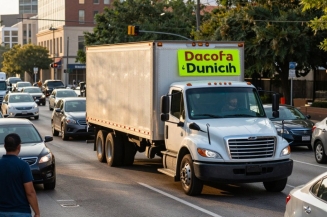
Mobile Billboard vs Digital Outdoor Advertising for Texas Campaigns
Last Updated: November 24, 2026
Quick Summary
A mobile billboard is an advertisement on a truck, trailer or van that drives or parks in planned locations, while digital outdoor advertising uses a fixed electronic screen. Mobile billboards suit short, targeted campaigns across several locations, while fixed digital screens suit steady presence at one place.
- Mobile billboards move to where your customers are, such as a new store, an event or a high-traffic neighborhood.
- Fixed digital screens reach the same road or intersection consistently, which suits long-running brand presence.
- Compare quotes on the same assumptions: days, route, production, minimums and impression methodology.
- Choose your measurement metric, such as promo codes or QR scans, before the campaign launches.
- Traffic counts and exposure estimates show possible reach but cannot prove the ad changed behavior.
Table of Contents
- How Mobile Billboard vs Digital Outdoor Advertising Differ
- What Mobile Billboard Advertising Is
- What Digital Outdoor Advertising Is and Where Digital Mobile Billboards Fit
- Mobile Versus Fixed-Location Comparison: Reach, Targeting and Visibility
- Mobile Billboard Advertising Cost and Digital Billboard Advertising Cost Compared
- Mobile Billboard Campaign Planning: Routes, Timing and Measurement Limits
- Choosing Your Next Step for a Texas Campaign
- Frequently Asked Questions
How Mobile Billboard vs Digital Outdoor Advertising Differ
Mobile billboard advertising puts your message on a moving vehicle, while digital outdoor advertising places an LED screen in a fixed location. For a closer look at digital billboard trucks specifically, see digital billboard trucks worth it for your campaign. Both formats reach people in public spaces, but they differ in how the audience is reached and how the campaign can be targeted. This guide starts with the decision that matters most to a Texas campaign.
The core difference is movement. A fixed digital screen reaches the same stretch of road or the same intersection day after day. A mobile unit can travel to where your customers are, such as a new store opening, a stadium event, or a neighborhood with high foot traffic. Route choice can matter as much as the creative itself.
Watch out: a mobile unit only helps if it parks or drives where your audience actually is. Ask any provider for the route and location plan before you sign.
What Mobile Billboard Advertising Is
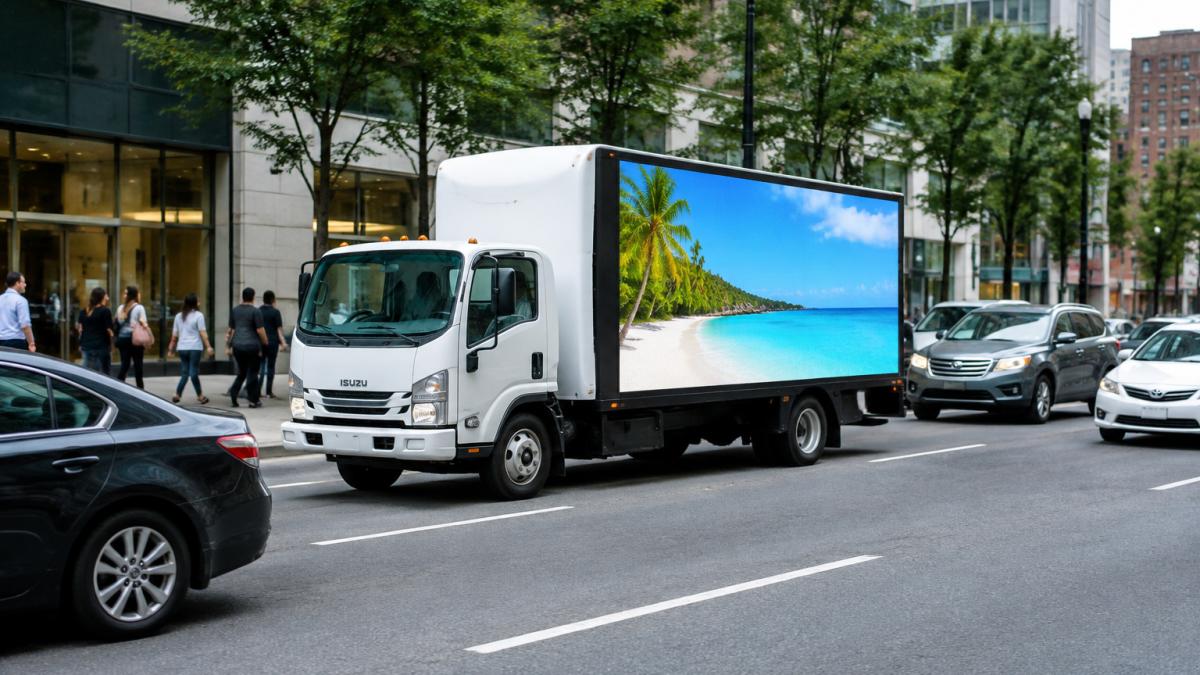
Mobile billboard advertising is the practice of displaying an advertisement on a truck, trailer or van that drives or parks in planned locations. Texas Mobile Advertising offers LED digital mobile billboard trucks, glass-walled display trucks and vinyl billboard trucks.
The main advantage is geographic flexibility. A campaign can move between a new store, a festival grounds, or a clinic’s service area within the same week. Onboard LED screens can show video and image ads, which static signs cannot do.
What Digital Outdoor Advertising Is and Where Digital Mobile Billboards Fit
Digital outdoor advertising is a broad category. It includes any electronic display placed outdoors, such as a digital screen on a building, a roadside LED board or a transit display. These screens stay in one location, and the advertiser usually buys time on the display for a set period.
Digital mobile billboards sit inside this category but differ from it. They are digital screens that move. So the choice is not really between “digital” and “mobile.” It is between a fixed digital placement and a mobile digital placement. The second option trades a stable, long-running position for reach across many locations.
Out-of-home advertising, or OOH advertising, covers both formats along with static billboards. Which format fits depends on campaign objective, budget and how localized the audience is.
Mobile Versus Fixed-Location Comparison: Reach, Targeting and Visibility
Fixed digital screens offer consistent exposure at one spot. A mobile unit offers wider geographic coverage and more targeting options, because the route and parking locations can be chosen to match the audience.
| Factor | Mobile billboard | Fixed digital outdoor |
| — | — | — | — |
| Geographic reach | Moves across routes and events | Fixed location |
| Targeting | Route, venue and time based | Location and traffic based |
| Creative changes | Rotate content across stops | Rotate content on schedule |
| Best for | Launches, events, short local pushes | Long-running brand presence |
Visibility works differently in each format. A fixed screen builds familiarity through repetition. A mobile unit draws attention because it is unexpected and larger than life, which is the attention-grabbing effect Texas Mobile Advertising designs around. Neither format guarantees that people notice the ad, so measurement matters (covered below).
Here is a practical way to choose. If your audience is spread across a region and changes by event or season, the mobile format usually fits better. If you need a constant presence at one high-traffic corridor for months, a fixed digital screen is often the stronger choice.
Mobile Billboard Advertising Cost and Digital Billboard Advertising Cost Compared
Pricing for both formats depends on quantity, dates, route, duration, and delivery, and it varies between providers and markets. Texas Mobile Advertising has not published a rate card, so the figures below are not quotes from us. For current prices or a quote, contact Texas Mobile Advertising directly on its website.
The useful comparison is not a single headline rate. It is a normalized cost per thousand impressions, or CPM, built on the same assumptions for both formats. Mobile billboard campaigns and fixed digital outdoor placements typically differ in daily rate, minimum commitment and production lead time, so compare them on the same assumptions. The table below shows the cost components to normalize before you compare quotes.
| Cost component | Mobile billboard | Fixed digital outdoor |
|---|---|---|
| Media cost basis | Per day or per route | Per four-week period or per spot |
| Minimum commitment | Often one day to one week | Often four weeks or longer |
| Production | Creative adapted to LED or vinyl; often included | Creative adapted to screen specs; often separate |
| Installation | Included in route plan | Included in media cost |
| Travel or repositioning | Charged per route or per zone | Not applicable |
| Audience measurement | Route and traffic estimates | Location and traffic counts |
To compare like for like, ask each provider for the number of days and hours the unit will operate, the route, venues, or locations covered, whether creative production and installation are included, any minimum commitment and cancellation terms, and how impressions or audience reach are estimated. A quote that looks lower can cost more once production, travel days, or minimums are added.
CPM is only useful if both providers use the same audience assumptions. A mobile provider may count every person along a route, while a fixed digital provider may count only traffic passing a single screen. Ask for the impression methodology in writing, then divide total cost by estimated impressions to get a comparable CPM. Watch out: a low CPM built on inflated impressions is worse than a higher CPM built on conservative counts.
The right answer depends on campaign duration, geographic spread, and how precisely you need to target. Request quotes for your specific scenario to compare total cost.
Mobile Billboard Campaign Planning: Routes, Timing and Measurement Limits
Good planning starts with the audience. Choose the areas where your customers already spend time: near a new location, outside an event, or along the commuter routes to a clinic. Then set the timing around those moments, such as weekday rush hours, a weekend event, or the first two weeks of a store opening.
Measurement needs honest expectations. Traffic counts and reach estimates show how many people could have seen the ad. They do not prove the ad changed behavior. The table below explains what each common metric can and cannot prove.
| Metric | What it measures | What it cannot prove |
|---|---|---|
| Traffic counts | Vehicles passing a point | Whether occupants saw the ad |
| Exposure estimates | Estimated impressions based on route and time | Whether the ad drove action |
| QR scans | Direct engagement from a code | Whether the scan came from the billboard |
| Promo codes | Redemptions tied to the campaign | Incremental lift versus no campaign |
| Lift studies | Change in behavior versus a control group | Causation without a clean control |
For a restaurant group, foot traffic can be tracked with promo codes or visit questions. For a healthcare system, you might track calls or appointment bookings from the campaign area. Radio call-ins are easier to track, so mobile campaigns often need a deliberate tracking plan from the start.
A decision framework helps before you buy. For a product launch, use a mobile unit to cover several neighborhoods in the first two weeks, then measure with promo codes. For an event, park the unit at approach routes and track with a dedicated QR code. For local retail, run a fixed digital screen near the store for a month and compare foot traffic. For broad awareness, combine both formats and use lift studies to estimate impact. For retargeting, use mobile to drive QR scans that feed a retargeting audience.
A common mistake is setting a campaign goal without deciding how you will measure it. Choose the metric before the first unit rolls out. Watch out: a campaign that reports impressions without a control group cannot tell you whether the ad caused the visits or whether they would have happened anyway.
Choosing Your Next Step for a Texas Campaign
If you are weighing mobile billboards against digital outdoor advertising, start with three questions: where is your audience, how long do you need to be visible, and how will you measure results? Mobile units suit short, targeted campaigns across several locations. Fixed digital screens suit steady presence at one place.
To shortlist providers, read the Best Mobile Billboard Companies in Texas Compared guide. The detailed best-mobile-billboard-companies-in-texas-compared-1795321549 breakdown lays out what each option offers. When you are ready to act, get a free consultation from Texas Mobile Advertising to plan routes, timing and a budget for your campaign.
Texas Mobile Advertising builds mobile billboard campaigns around the routes, venues and audiences that matter to your business. With LED digital trucks and glass-walled display vehicles, your message gets noticed instead of ignored. Contact us for a free consultation.
Frequently Asked Questions
How much does it cost to advertise on a digital billboard?
Pricing depends on quantity, dates, location and delivery, so Texas Mobile Advertising does not publish a standard rate here. Fixed digital billboard contracts are often sold on monthly or multi-week terms, and mobile campaigns are usually quoted by the day or by a set number of hours on a route. The most reliable way to compare costs is to request quotes for the same market, the same duration and the same audience reach, then ask each provider to explain its impression assumptions. For a current price or a quote for your campaign, contact Texas Mobile Advertising directly through its website.
Are mobile billboards more effective than digital billboards?
Neither format is universally more effective. Mobile billboards can move toward audiences, cover specific routes and target events, while digital fixed billboards offer a stable location and consistent daily exposure. Effectiveness depends on your campaign objective, audience and local traffic patterns. A mobile billboard campaign suits launches, events and new store openings, while a fixed digital board suits long-running brand presence in one corridor. Compare both against the same measurable goal before deciding.
How do you measure the reach of an outdoor advertising campaign?
Reach for outdoor campaigns is usually estimated from traffic counts, route exposure and visibility factors such as viewing angle and sightline. These are estimates, not direct counts of people who saw the ad. Ask providers how they calculate impressions, cost per thousand (CPM) and frequency, and which data sources they use. Attribution is also limited: outdoor ads rarely produce a trackable click, so pair campaigns with promo codes, unique landing pages or location-based visit tracking to see whether exposure leads to action.
When should a business choose a mobile billboard over a fixed digital billboard?
Choose a mobile billboard when you need to reach a specific area, event or route for a limited window, such as a product launch, a grand opening or a festival. Mobile units can follow your audience and change routes as your plan changes. A fixed digital billboard fits better when you want steady exposure in one corridor over several months. If your campaign spans multiple store openings across Texas, mobile units can cover several markets, but confirm scheduling capacity with your provider before committing.
