
Benefits of Mobile Advertising for Healthcare
Table of Contents
- Why Mobile Advertising Works for Healthcare Providers
- Reaching Patients Where They Are: The Power of Mobile Visibility
- Healthcare Mobile Billboard Advertising: Targeted Local Outreach
- Building Trust and Brand Awareness in Your Community
- Mobile Advertising Campaign Examples That Drive Results
- Measuring Healthcare Advertising ROI and Campaign Performance
- Mobile Medical Clinic Advertising and Patient Acquisition
- Privacy, Compliance, and Ethical Healthcare Mobile Marketing
- Frequently Asked Questions
Last Updated: October 21, 2026
Why Mobile Advertising Works for Healthcare Providers
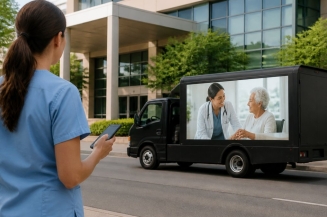
Mobile advertising has fundamentally changed how healthcare organizations reach and engage patients, and understanding the benefits of mobile advertising for healthcare is essential for modern patient acquisition. Unlike traditional static billboards or print ads that patients ignore or throw away, mobile advertising for healthcare captures attention through movement, visibility, and strategic placement in high-traffic areas where your target patients actually are. This approach transforms your marketing message into a dynamic, larger-than-life presence that stops people in their tracks.
Healthcare systems, clinics, and urgent care facilities face a unique challenge: patients often don’t seek out your services until they need them. By that time, they may not remember your location or even know you exist. Mobile advertising solves this by keeping your brand visible consistently throughout your community.
The power of mobile advertising for healthcare lies in its ability to reach people where traditional advertising cannot. Radio spots get turned off. Television ads are skipped. Direct mail gets discarded. But a mobile billboard truck driving through your service area? That’s impossible to ignore. It’s present, it’s moving, and it commands attention in ways that legacy advertising simply cannot match.
Healthcare organizations often underestimate how many potential patients don’t know where to find them. Mobile advertising for healthcare fills that awareness gap by putting your location and services directly in front of people in your community, repeatedly, until recognition becomes automatic.
Reaching Patients Where They Are: The Power of Mobile Visibility
Mobile advertising for healthcare works because it meets patients in their actual environment. Your target audience isn’t sitting at home waiting for your clinic’s radio spot. They’re driving to work, walking downtown, picking up groceries, and moving through their neighborhoods.
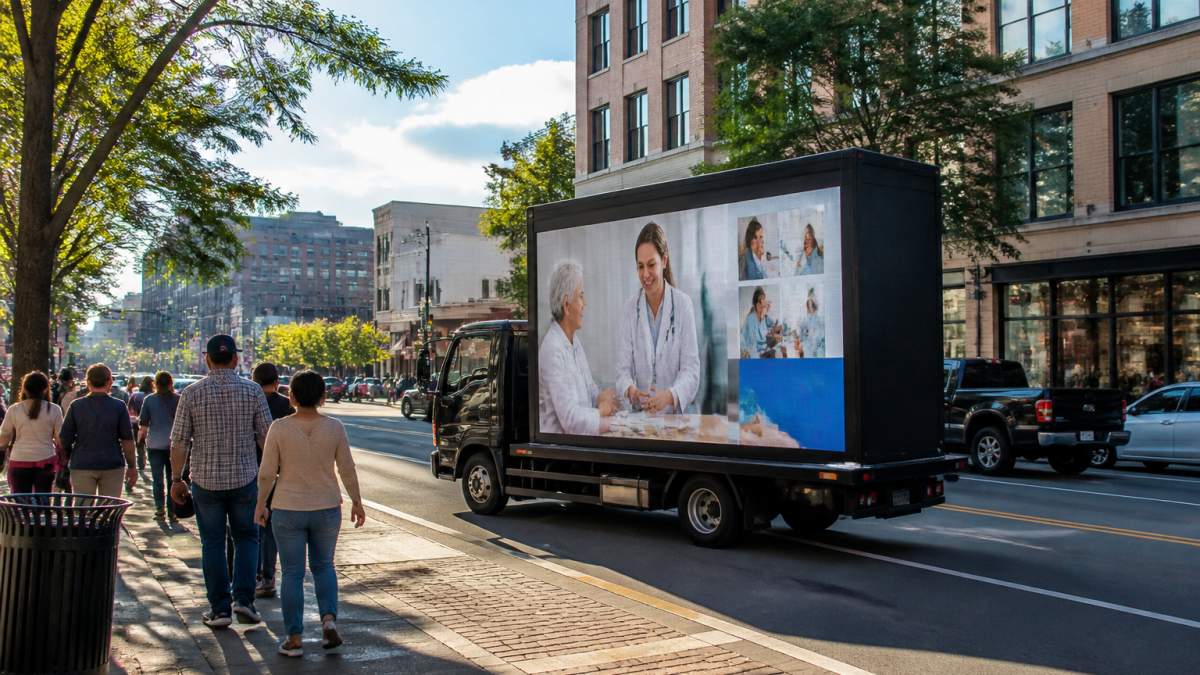
Strategic placement matters enormously. A mobile advertising vehicle positioned near your clinic location, in high-density residential areas, or along major commute routes ensures maximum visibility among people who could actually become your patients.
The consistency of mobile visibility builds brand recognition over time. When patients see your clinic’s name and contact information repeatedly as they go about their daily lives, it creates a mental anchor. When they eventually need healthcare services, your clinic becomes the first name they think of because they’ve already seen it dozens of times.
Local communities respond to visible, present brands. Mobile advertising demonstrates that your healthcare organization is active, established, and invested in serving the area. It’s a form of community presence that traditional advertising cannot replicate.
Healthcare Mobile Billboard Advertising: Targeted Local Outreach
Healthcare mobile billboard advertising represents a precision approach to reaching specific patient populations in defined geographic areas. Unlike broad-based media buys that waste budget reaching people outside your service area, mobile billboard vehicles can be deployed to neighborhoods, business districts, and community areas where your ideal patients live and work.
This targeted local outreach is particularly effective for healthcare systems launching new clinic locations. When you’re opening a new urgent care facility or expanding to a new neighborhood, mobile advertising announces your arrival directly to the people who will use your services. It builds awareness before your doors even open, ensuring strong patient volume from day one.
The visual impact of a healthcare mobile billboard is substantially different from static signage. Movement catches the eye. Large-format LED displays showcase your services, hours, and contact information with clarity and professionalism. Glass-walled display vehicles can even transform into mobile showrooms, letting potential patients see what your facility offers before they visit in person.
Community-specific campaigns are one of the most effective uses of healthcare mobile billboard advertising. A campaign targeting a specific neighborhood or demographic group ensures your budget reaches the right people. Texas Mobile Advertising‘s experience with over 1,400 completed campaigns includes extensive work with healthcare organizations deploying vehicles to maximize local visibility and patient acquisition.
Healthcare advertising compliance matters. Any mobile advertising campaign must follow HIPAA guidelines and FTC regulations regarding health claims and testimonials. Ensure your messaging is accurate, non-misleading, and compliant with all applicable healthcare advertising rules before deployment.
Building Trust and Brand Awareness in Your Community
Trust is the foundation of healthcare marketing, and the benefits of mobile advertising for healthcare include building that trust through consistent, visible community presence. Patients choose providers based partly on clinical quality, but also on familiarity, reputation, and perceived reliability. Mobile advertising for healthcare builds trust through consistent, visible community presence.
Brand awareness among potential patients translates directly to patient acquisition. A person who has seen your clinic advertised multiple times is far more likely to choose you when they need care than someone who has never heard of you. Mobile advertising accelerates this awareness-building process by reaching large numbers of people repeatedly over a concentrated time period.
Healthcare organizations that use mobile advertising often see increased foot traffic, more appointment requests, and stronger brand recognition in their service areas. The visibility creates a halo effect where your clinic becomes associated with active, professional healthcare delivery. This perception advantage is particularly valuable in competitive markets where multiple providers serve the same area.
Community trust also builds when healthcare advertising demonstrates accessibility and patient-centered services. Messaging that emphasizes urgent care availability, extended hours, or specialized services reaches potential patients who might not find these details through traditional channels. Mobile advertising ensures this information reaches the right audience at the right time.
Mobile Advertising Campaign Examples That Drive Results
Successful healthcare mobile advertising campaigns share common elements: clear messaging, strategic placement, and measurable visibility. Understanding what works helps healthcare organizations design their own campaigns for maximum impact.
A regional urgent care network deployed mobile LED trucks in three neighborhoods simultaneously, each displaying different messaging targeted to that area’s demographics. One neighborhood saw messaging emphasizing sports injury treatment; another focused on family medicine and pediatric services.
Another example involved a new dental practice opening in an underserved area. Mobile billboard trucks circulated for four weeks before the clinic opened, building awareness and establishing the practice’s name in the community.
Healthcare systems expanding emergency services used mobile advertising for healthcare to announce new rapid-care facilities. By deploying vehicles in high-traffic areas near the new locations, they ensured that potential patients knew about the new services before they needed them.
These examples demonstrate that mobile advertising for healthcare works best when it’s strategic, targeted, and deployed with clear business objectives. Whether launching new services, building brand awareness in a new market, or driving patient acquisition, mobile advertising delivers measurable results.
The most effective healthcare mobile advertising campaigns combine clear, benefit-focused messaging with strategic placement in high-visibility areas where target patients spend their time. Consistency over time builds brand recognition that converts into patient appointments and loyalty.
Measuring Healthcare Advertising ROI and Campaign Performance
One of the most common objections to mobile advertising for healthcare is the difficulty of measurement. Unlike digital ads with built-in tracking or radio spots with call-in codes, how do you prove that a mobile billboard actually drove patient appointments?
Contact Us Now for a Free Consultation →
The answer lies in structured measurement approaches. Healthcare organizations should establish baseline metrics before launching campaigns: current appointment volume, patient acquisition cost, and average revenue per new patient. Then, during the mobile advertising campaign, track changes in these metrics against the baseline.
Appointment tracking is the primary measurement tool. Many healthcare practices use phone systems that identify how patients heard about the clinic.
Geographic data provides additional insight. If mobile advertising vehicles are deployed in specific neighborhoods, healthcare organizations can track whether appointment requests increase from those areas during the campaign. A significant uptick in patients from targeted neighborhoods compared to non-targeted areas demonstrates campaign effectiveness.
Patient surveys offer qualitative measurement. Asking new patients whether they’ve seen your clinic advertised on mobile vehicles reveals how many people noticed the advertising and how it influenced their decision to seek care.
Healthcare advertising ROI calculations should factor in patient lifetime value. A single new patient acquired through mobile advertising might generate thousands of dollars in revenue over years of care.
Mobile Medical Clinic Advertising and Patient Acquisition
Mobile medical clinics and traveling healthcare services face unique advertising challenges. These services must build awareness that they exist, establish where they’ll be located, and drive patient visits before moving to the next location. Mobile advertising for healthcare is ideally suited to this challenge.
A mobile health screening program using mobile billboard trucks to advertise upcoming clinic dates and locations in advance of arrival saw increased attendance compared to previous marketing efforts. The trucks circulated in target areas, displaying specific dates, times, and services offered. This advance notice gave potential patients time to plan their visit.
Telehealth and urgent care services expanding into new markets use mobile advertising to establish brand presence quickly. In competitive healthcare markets, being first to build awareness creates a significant patient acquisition advantage. Mobile advertising accelerates this timeline by reaching large audiences rapidly.
Rural and underserved healthcare initiatives particularly benefit from mobile advertising for healthcare. In areas where traditional media reach is limited or expensive, mobile vehicles deliver direct visibility to dispersed populations.
Patient acquisition costs decrease when mobile advertising builds sufficient brand awareness that patients actively seek out your services. Instead of spending heavily on each individual patient acquisition channel, a strong mobile advertising campaign creates organic demand as patients self-select based on prior awareness and familiarity.
Privacy, Compliance, and Ethical Healthcare Mobile Marketing
Healthcare advertising operates under stricter regulations than most industries.
Patient privacy is paramount. Any healthcare advertising campaign must ensure that patient information is protected and that messaging doesn’t inadvertently reveal sensitive health information.
Health claims require substantiation. Any messaging on a mobile billboard about specific treatments, success rates, or health outcomes must be truthful, not misleading, and supported by evidence (the FTC).
Testimonials and endorsements in healthcare advertising require proper disclosure. If a mobile billboard features a patient testimonial about a healthcare service, that testimonial must clearly disclose any compensation or relationship. This protects consumers and maintains the credibility of healthcare marketing.
Ethical healthcare advertising builds trust by being honest, transparent, and focused on patient benefit rather than aggressive sales tactics. Mobile advertising for healthcare should communicate genuine value to patients: accessibility, quality care, specialized services, and community commitment.
Texas Mobile Advertising understands healthcare advertising regulations and works with healthcare organizations to ensure all mobile campaigns comply with HIPAA, FTC guidelines, and industry best practices. Proper compliance protects your organization while building patient trust through ethical, transparent marketing.
Healthcare organizations that embrace mobile advertising gain a competitive advantage in patient acquisition and community brand awareness.
Frequently Asked Questions
How can mobile billboard advertising help healthcare clinics reach patients?
Mobile billboards position your clinic’s message directly in high-traffic areas where potential patients live, work, and travel. Unlike static billboards, mobile advertising reaches multiple neighborhoods and communities in a single campaign. Healthcare clinics use this to announce new locations, promote specific services, or drive appointment bookings. The combination of large-format visuals and strategic routing ensures your message reaches targeted audiences when they’re most receptive to healthcare information.
What are the benefits of mobile advertising for healthcare providers?
Mobile advertising for healthcare providers delivers several key advantages: increased local visibility in underserved communities, direct patient engagement without traditional media gatekeeping, flexible campaign timing around health awareness months or seasonal demand, and the ability to showcase services through video and image content on LED screens. Healthcare organizations also benefit from reaching audiences who may not use traditional media channels, making mobile advertising effective for patient acquisition and appointment bookings.
How can healthcare organizations measure the results of mobile advertising?
Healthcare advertising ROI can be tracked through appointment booking increases during campaign periods, patient surveys asking how they heard about your clinic, GPS data showing foot traffic to your location, website traffic spikes correlated with mobile campaign dates, and phone call volume. Many healthcare systems track new patient acquisition costs and compare them against campaign investment. Digital integration, such as unique phone numbers or QR codes on mobile ads, provides direct attribution of patient inquiries to specific campaigns.
How does mobile advertising compare with traditional healthcare advertising?
Mobile advertising reaches patients actively in their community rather than hoping they’ll see a radio spot or TV commercial. Unlike traditional media that patients can ignore or skip, mobile billboards command attention through size and movement. Healthcare providers report higher engagement rates because mobile ads appear in geographic areas matching patient demographics. Traditional advertising also requires longer lead times and fixed placements, while mobile campaigns offer flexibility to adjust messaging, timing, and routes based on real-time performance data.